
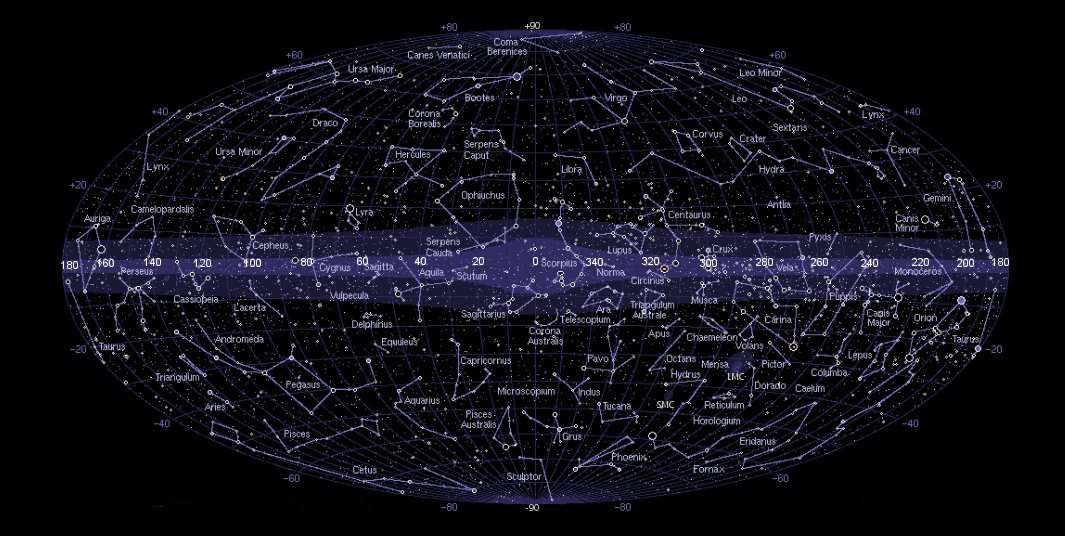
How Many Constellations Are There?
The night sky is a mesmerizing zodiac tapestry of stars, planets, and celestial wonders, and among these marvels are constellations — patterns of stars that humans have admired and studied for thousands of years. But just how many constellations are there? The answer lies in human history, science, and culture.
Currently, 88 constellations are officially recognized by the International Astronomical Union (IAU), but the story of constellations does not end there. It encompasses ancient Greek mythology, the Western Zodiac system, and the evolving human understanding of the cosmos.
This article explores the total number of constellations, their significance, and the enduring fascination they hold.
What Are Constellations?
Constellations are groups of stars that form recognizable patterns in the night sky. Often named after animals, mythological figures, or everyday objects, these star groupings have played vital roles in navigation, storytelling, and the development of astronomy.
Although stars within a constellation may appear close to one another, they are often vast distances apart in reality. The patterns we see are a projection based on our viewpoint from Earth.
What are constellations? Encyclopaedia Britannica, Inc.
The Official Count — 88 Constellations
The International Astronomical Union (IAU) officially recognizes 88 constellations. These constellations cover the entire sky, creating a celestial map that allows astronomers to categorize and locate stars and other celestial objects.
- Animal-Themed Constellations: Of the 88 constellations, 42 depict animals. These include familiar patterns like Leo the Lion, Canis Major the Great Dog, and Pisces the Fish.
- Objects and Mythological Figures: Another 29 constellations represent inanimate objects, such as Lyra (the lyre) and Crater (the cup). Meanwhile, 17 depict mythological characters, such as Orion the Hunter and Andromeda the Chained Maiden.
Why Are There 88 Constellations?
The number 88 is not arbitrary. It results from the historical evolution of stargazing and astronomy. Different cultures around the world created their own systems of identifying star patterns. Over time, as astronomy developed into a global science, it became necessary to standardize these patterns for consistency and clarity in scientific communication.
The IAU adopted the 88 constellations in 1922, ensuring that stargazers worldwide would share a common celestial map. These constellations are divided based on their positions in either the northern or southern hemisphere skies, with some visible only to observers living in specific parts of the world.
The Western Zodiac Constellations
When people think of constellations, many immediately picture the Western Zodiac. These 12 constellations hold special prominence due to their association with astrology and the path of the Sun.
What Is the Zodiac?
The Zodiac constellations lie along the plane of the ecliptic, which is the apparent path the Sun takes through the sky over the course of a year.

The names of the Zodiac constellations are familiar to most people and correspond to astrological signs. They are:
- Aries
- Taurus
- Gemini
- Cancer
- Leo
- Virgo
- Libra
- Scorpio
- Sagittarius
- Capricorn
- Aquarius
- Pisces
Zodiac and the Yearly Cycle
Throughout the year, the Sun appears to “move” through each Zodiac constellation. For example, the Sun is considered to pass through Aries from late March to mid-April, marking the start of spring in the Northern Hemisphere.
It is important to note that the Sun only appears to travel through these constellations because Earth revolves around the Sun, giving us the illusion of celestial motion.
Cultural Significance of the Zodiac
The Zodiac system dates back thousands of years, originating with the Babylonians and later adopted by the Greeks and Romans. Historically, Zodiac constellations were used to track time and seasons, as well as to predict celestial events. Today, they remain culturally significant, primarily through astrology, where they are associated with personality traits and life predictions.
The Greek Constellations
Greek mythology has had a profound influence on modern astronomy. Many of the most recognizable constellations today have origins in ancient Greece and were cataloged by Claudius Ptolemy, one of history’s most influential astronomers.
Ptolemy’s 48 Constellations
Ptolemy, an ancient Greek astronomer and mathematician, compiled a list of 48 constellations that became the foundation for the modern system.
These constellations included figures from Greek myth, such as Cassiopeia, Perseus, and Hercules, as well as zodiac constellations like Aries and Sagittarius.
While Ptolemy’s list of constellations set the stage for classical astronomy, the modern list of 88 constellations expands beyond his work, incorporating star patterns known to cultures outside of Greece and encompassing the southern hemisphere sky, which was less familiar to ancient Greeks.
Stories in the Stars
Each Greek constellation carries a story. For instance, Orion tells the tale of a skilled hunter placed among the stars by the gods. Pegasus, the winged horse, represents freedom and heroics. These stories not only entertain but also preserve the myths and worldview of ancient Greece.
Historical and Cultural Significance of Constellations
Across cultures and throughout history, constellations have served various purposes, from navigation to storytelling. Different civilizations developed their own star maps, drawing on their unique environments, beliefs, and narratives.
- Ancient Navigation: Mariners often relied on constellations like Ursa Minor, which includes Polaris, the North Star, to guide them across the seas.
- Cultural Myths: Many indigenous peoples incorporated constellations into their folklore. For example, Native American tribes have legends tied to the Big Dipper and its movement throughout the year.
- Scientific Development: Constellations have contributed significantly to the development of astronomy, helping early astronomers divide and map the sky.
Today, constellations continue to inspire awe and curiosity. While technology has replaced their practical applications, their stories and symbolism remain embedded in human culture.
FAQs About Constellations
1. Why Are There Exactly 88 Constellations?
The number 88 was standardized by the International Astronomical Union in 1922 to create a uniform celestial map. This official list helps astronomers and stargazers around the world use common reference points.
2. Are Constellations Real Structures in Space?
No, constellations are not physical formations. They are patterns that appear from Earth’s perspective, but the stars within a constellation are often far apart and unrelated to one another.
3. Do Other Cultures Have Different Constellations?
Yes, many cultures have developed their own systems for identifying star patterns. For example, ancient Chinese and Indian astronomers created unique celestial maps that reflect their respective mythologies and knowledge systems.
4. What Is the Difference Between Zodiac and Non-Zodiac Constellations?
Zodiac constellations lie along the ecliptic (the Sun’s path in the sky) and are associated with astrology. Non-Zodiac constellations are not along the ecliptic and include familiar patterns like Ursa Major (Big Dipper) and Orion.
5. Can I See All 88 Constellations from One Location?
No, your geographical location and the time of year determine which constellations are visible. Some constellations can only be seen from the Northern Hemisphere, while others are exclusive to the Southern Hemisphere.
6. Has the Number of Constellations Changed Over Time?
Historically, different civilizations recognized varying numbers of constellations. The modern list of 88 was codified in the 20th century, uniting these diverse systems under a single framework.
Final Thoughts
Constellations serve as a bridge between science, culture, and storytelling. From the 88 IAU-recognized constellations to the more familiar Zodiac and Ptolemaic star patterns, these celestial groupings have fascinated humans for centuries.
Whether you’re gazing at Orion’s Belt on a winter night or identifying the zodiac sign that marks your birthday, constellations are more than just stars—they’re a reminder of our shared history, curiosity, and connection to the universe.
Take a moment to look up at the night sky and appreciate the brilliant stories written among the stars.