
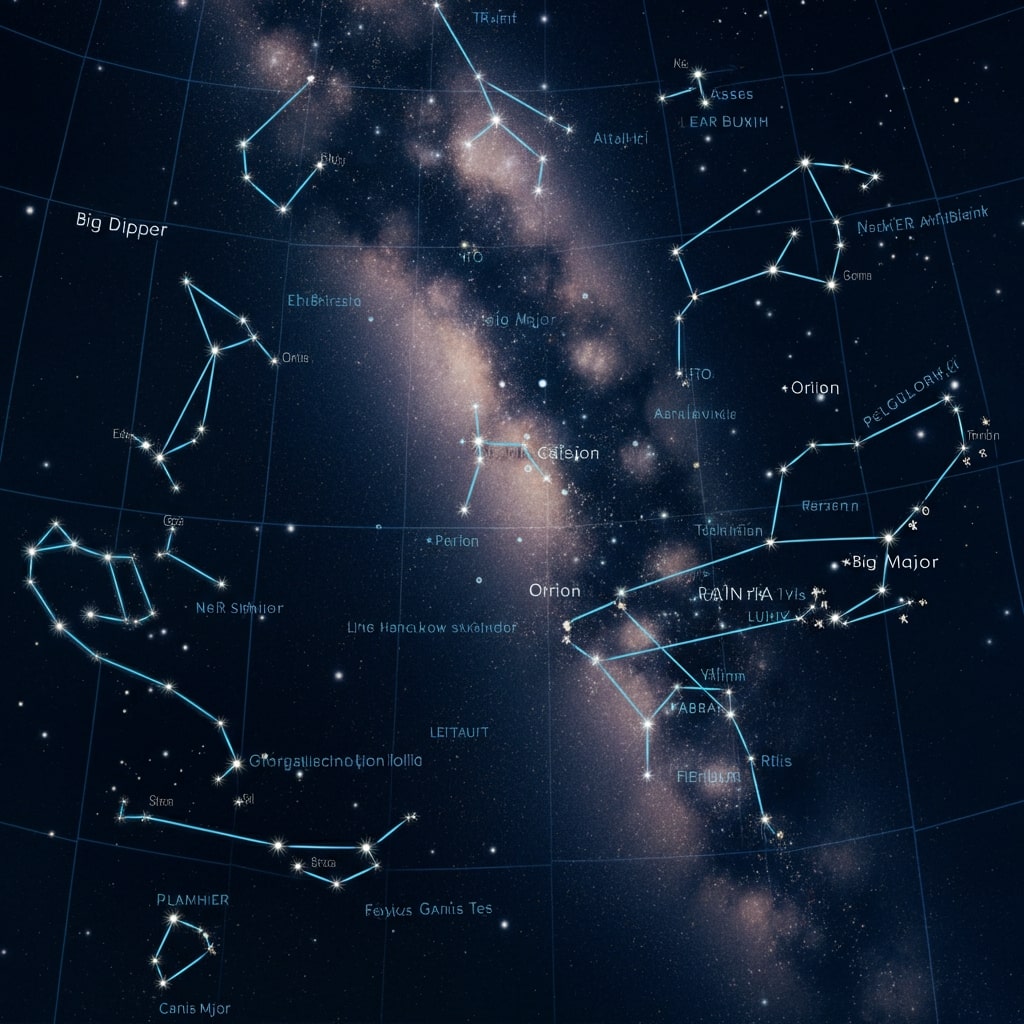
Stargazing has fascinated humanity for thousands of years. By observing and connecting the stars, early civilizations created patterns resembling animals, tools, or mythological figures. These patterns, now known as constellations, played vital roles in navigation, timekeeping, and understanding seasonal changes. Today, stargazing remains a beloved pastime, blending science with a sense of wonder.
If you’ve always admired the night sky but struggled to identify its celestial features, this guide will take you step by step through finding major constellations and understanding their significance. We’ll cover well-known groups like the Big Dipper, Orion, and Canis Major and explore how these star patterns can help you understand your place on Earth.
Understanding Constellations and Their Role
Constellations are patterns of stars that humans have visualized in the night sky for millennia. While the stars themselves don’t move, our view of them changes due to the Earth’s rotation and orbit around the Sun. This movement alters which constellations appear in the sky at certain times of the year.
For ancient people, constellations were more than artistic patterns; they were practical tools for survival. Sailors relied on these stars for navigation during long ocean voyages, while farmers used them to track the seasons. Even today, constellations are used by astronomers, educators, and amateur stargazers to learn more about our universe.
How to Identify Major Constellations
Each constellation has unique characteristics that make it easier to find, even for beginners. By focusing on a few key patterns, you can begin to unlock the secrets of the night sky.
1. The Big Dipper
The Big Dipper is one of the most easily recognizable star patterns for novices. Technically classified as an asterism (a smaller grouping of stars within a larger constellation), it is part of the larger Ursa Major, or “Great Bear.” 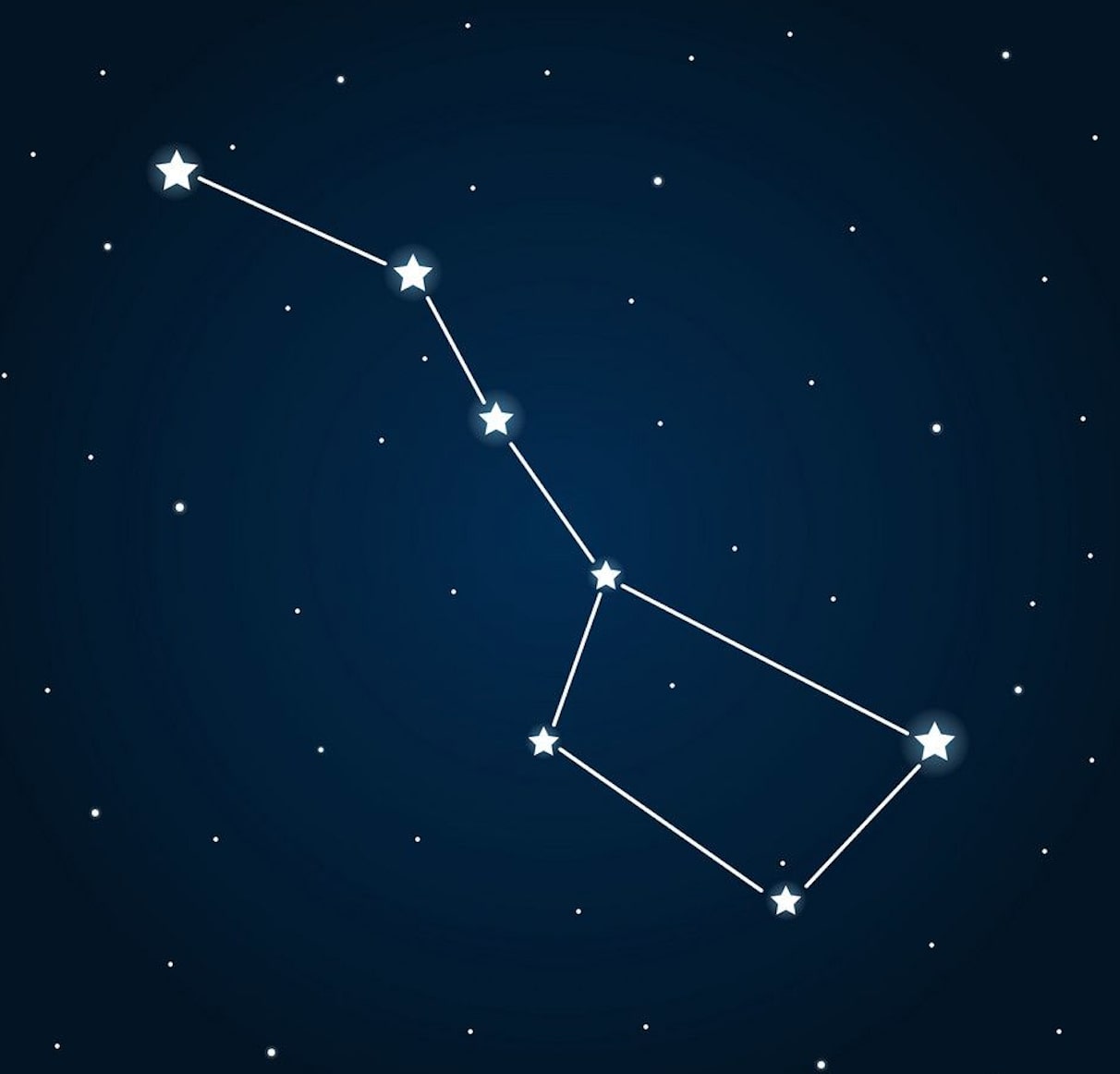 Key features of the Big Dipper:
- Shape: The Big Dipper consists of seven main stars. Four outline a bowl, while three form the handle.
- Significance: The outer edge of the Big Dipper’s bowl features two stars known as “pointer” stars. These point directly to Polaris, the North Star, helping you determine which direction is north.
- Cultural and Mythological Connections: Many cultures have stories about the Big Dipper. For example, Native American legends often depict the bowl as a bear being chased by hunters.
How to find it
- Scan the northern sky. It’s visible year-round from most locations in the Northern Hemisphere.
- Look for the signature “dipper” shape. Once you spot the pointer stars, trace an imaginary line to locate Polaris.
2. Orion, the Hunter
Orion is one of the most famous and easiest-to-spot constellations in the winter sky. Its distinct arrangement makes it an excellent starting point for budding stargazers. Key features of Orion:
- Shape: The three bright stars in a row that form Orion’s Belt are its most prominent feature. Additional stars outline Orion’s shoulders and legs.
- Mythology: Ancient Greek mythology portrays Orion as a mighty hunter set in the sky by the gods. Some cultures, like those in Africa, viewed the constellation as a symbol marking the beginning of agricultural seasons.
- Bright Stars: Orion is home to two of the brightest stars in the night sky—Betelgeuse, a red giant marking his shoulder, and Rigel, a blue supergiant located on his leg.
How to find it
- Look toward the southern sky during winter evenings.
- Begin with Orion’s Belt, the three stars closely aligned in a straight line. From there, identify Betelgeuse and Rigel to complete the figure.
3. Canis Major, the Great Dog
Canis Major holds the title of housing Sirius, the brightest star in our sky. This constellation represents one of Orion’s hunting dogs in mythology.
 Key features of Canis Major:
- Shape: Sirius marks the dog’s nose, while a triangle of stars to the south outlines its hindquarters.
- Significance of Sirius: Also called the “Dog Star,” Sirius has long been associated with midsummer’s “dog days” because of its prominence in the sky during the hot months.
- Navigation: Sirius was used by ancient Egyptians to predict the flooding of the River Nile—a critical event for their agriculture.
How to find it
- Use Orion’s Belt as your starting point.
- Extend an imaginary straight line from the Belt downward toward the left. The first bright star you’ll encounter is Sirius.
Stargazing Tips for Beginners
Success in stargazing depends on preparation and context. Here are a few tips to enhance your experience.
- Choose a dark location: Light pollution from city lights can obscure your view of the night sky. Travel to rural areas or designated stargazing sites for the best experience.
- Check the moon phase: A new moon (when the moon is not visible) provides the darkest skies for stargazing, while a full moon can make stars harder to see.
- Bring the right tools: Binoculars and star maps are excellent aids for beginners. You can also download apps that use your phone’s GPS to identify stars and constellations for you.
- Be patient: It takes time to adjust your eyes to darkness and get accustomed to scanning the sky. Give yourself at least 20 minutes to find your bearings.
- Learn the seasonal shifts: Different constellations are visible at different times of the year, so study which patterns to look for in each season.
Constellations and the Seasons
Constellations have served as nature’s calendar for millennia. By tracking their positions, ancient civilizations marked the passage of seasons for farming, rituals, and celebrations.
- Spring: Look for Ursa Major and Leo, both visible high in the northern sky.
- Summer: The Summer Triangle—a trio of stars forming a triangle across Deneb, Altair, and Vega—is a staple of summer nights.
- Autumn: Pegasus and Andromeda make their grand appearance in the fall months.
- Winter: Aside from Orion and Canis Major, constellations like Gemini and Taurus dominate during winter.
FAQs About Stargazing and Constellations
1. What are constellations used for today?
Constellations are primarily used for navigation, learning astronomy, and stargazing. They also serve as reference points in professional astronomy for mapping the coordinates of celestial objects.
2. Can I see the Big Dipper from anywhere in the world?
The Big Dipper is visible from the Northern Hemisphere year-round. If you’re in the Southern Hemisphere, it disappears below the horizon.
3. Why do constellations change throughout the year?
The Earth’s orbit around the Sun changes our perspective of the stars, which is why certain constellations are associated with specific seasons. For instance, Orion is prominent in winter but not visible in the summer sky.
4. Is Sirius really the brightest star?
Yes, Sirius is the brightest star visible from Earth. Its proximity to our planet and its intrinsic luminosity make it outshine other stars in the sky.
5. How did ancient people use stars for navigation?
Sailors and explorers used stars like Polaris, the North Star, as fixed points to determine latitude and direction at sea. By observing the stars’ positions relative to the horizon, they could chart their courses.
6. Can you see constellations in a city?
Light pollution makes it challenging to see all but the brightest stars in urban areas. For the best stargazing experience, seek out rural locations with minimal artificial light.
Final Thoughts
Constellations and the stars that form them have guided and inspired humanity for generations. Whether you’re an amateur astronomer or someone who simply enjoys looking up at night, learning to find constellations like the Big Dipper, Orion, and Canis Major opens up an entirely new way to engage with the natural world.
With the right conditions and plenty of curiosity, the night sky becomes a canvas full of stories, science, and timeless wonder. Start exploring today, and you’ll soon find yourself not just looking at stars but connecting with them in meaningful ways.